


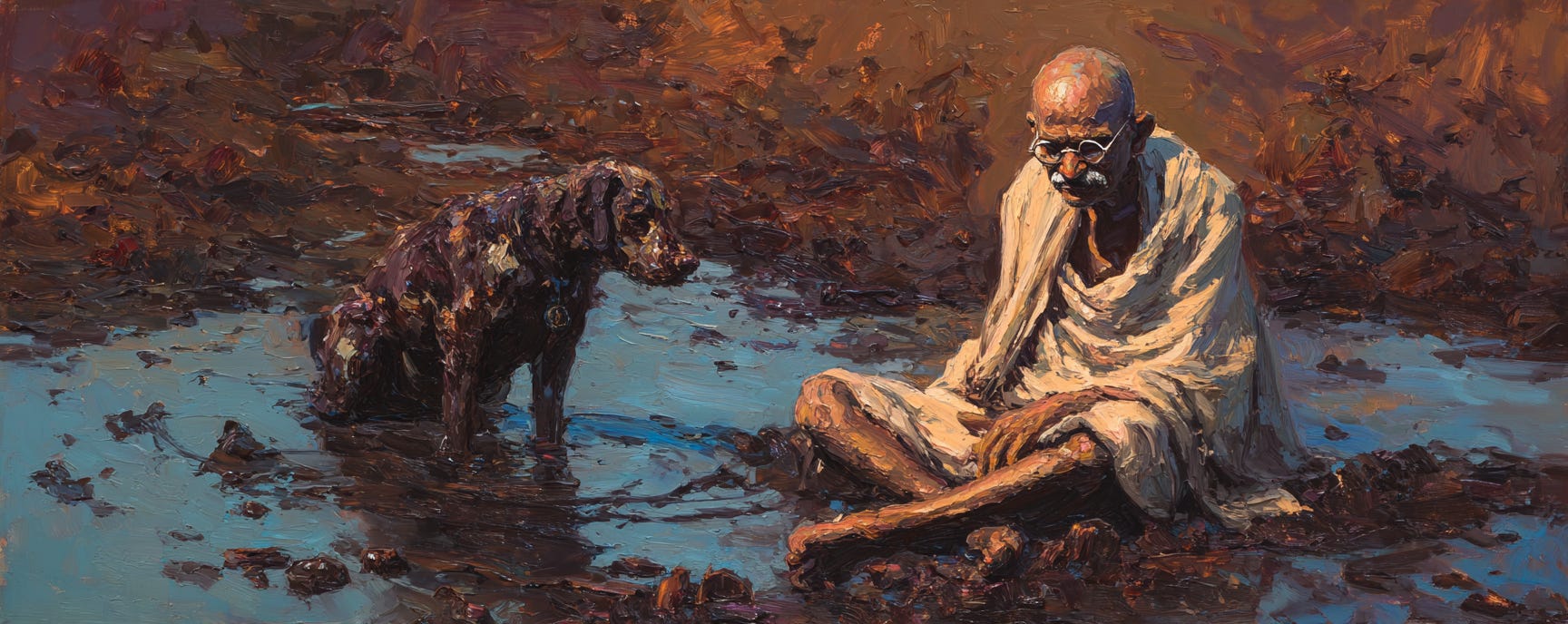
India suffers from a disease.
The disease that rots the very core of a soul.
It eradicates whatever is left within you, and makes you a mere breathing skeletal system. That’s it.
Poverty.
An untouchable raunchy lifestyle. Craved by all elites, yet only touched in films & posters.
Poverty is not an outcome. It’s a choice.
And India never escaped poverty, psychologically.
Indians love their trauma. Love their victimhood. Love their underdog status and that’s why...
I am disappointed and really want to understand: WHY...Why after so many years, our country is on growth trajectory, still we are not able leave the romance of being Poor, on purpose?
India possesses this mindset of romanticizing bourgeoisie India. We have become so comfortable with middle-class mentality. Of saving, saving, saving and dying in vain. Millions are actually poor through choice of their own. The doctor earning twenty lakhs annually who lives like he earns two lakhs. The engineer in Bangalore with comfortable salary who shops like he is unemployed. The business owner making profit who displays like he is making loss. This is chosen poverty. This is poverty as performance. This is poverty as protection.
Protection from what? From evil eye. From jealousy. From attention. From responsibility. From expectations. From becoming target. Colonial trauma taught Indians that visibility attracts violence. Those who displayed wealth were looted by Mughals, by British, by dacoits, by corrupt officials, by relatives, by society. Better to hide wealth. Better to live below capacity. Better to look poor even if you are not. This strategy made sense when violence was actual threat. It makes no sense now. But trauma persists three generations after threat disappeared.
The bourgeoisie romanticism is epidemic.
Middle class is celebrated as moral superior to both rich and poor. Rich are greedy. Poor are lazy. Middle class is virtuous. I hate this mentality. This is what leads a civilisation to fall.
Why the narrative always inclines towards being poor; being poor is cool and classy. Middle class is hardworking. Middle class is backbone of nation. This is lie. Middle class is neither moral nor immoral. Middle class is just economic category. But we turned it into identity. We made it virtuous. We made it aspirational not to escape but to remain in. This is sickness.
Saving, saving, saving and dying in vain. This is Indian life cycle. Earn money. Do not spend money. Save for emergency. Save for children. Save for old age. Save for dowry. Save for wedding. Save for medical expenses. Save for death. Never enjoy. Never splurge. Never experience. Just save. And then die with money in bank that you never used. Money that could have given you experiences, comfort, joy, memories. But you saved it. For what? For heirs who will spend it frivolously because they did not earn it and do not value it. This is not wisdom. This is cowardice disguised as prudence.
We do not like pain of being rich. Neither we appreciate the struggles of being poor, yet conformity pushes us to choose the latter. This is most revealing statement about Indian psychology. Pain of being rich. What pain? Responsibility of managing wealth. Attention from relatives. Expectations from society. Pressure to maintain status. Risk of losing wealth. Burden of decisions. Complexity of life. These are real.
India never had the balls to take risk.
But these are not pain. These are trade-offs. Everything has trade-offs. Being rich has trade-offs. Being poor has trade-offs. We focus obsessively on trade-offs of being rich while ignoring trade-offs of being poor. That’s what an Indian mindset is.
What are the Trade-offs of being poor: no security, no comfort, no freedom, no experiences, no peace, no dignity. But we accept these trade-offs readily while rejecting trade-offs of being rich. Because we are comfortable with poverty. We are familiar with struggle. We know how to be poor. We do not know how to be rich. BY soul, by mind, by lifestyle. Unknown territory terrifies us. So we stay with known. Even when known is suffering.
Also a large part of the blame should be on the freebie culture that India has been propagating for the last 25 years.

Indian people think luxury is opposite of poverty. It is not. It is opposite of vulgarity.
And India is not able to come out of vulgarity that is born in people’s conduct toward their lifestyle and mindset. This is critical distinction that Indians do not understand. Luxury is not about price. Luxury is about quality, taste, refinement, beauty, craftsmanship. You can be luxurious with modest means if you have taste. You can be vulgar with massive wealth if you lack taste. Indians lack taste. We confuse expensive with good. We confuse branded with valuable. We confuse imported with superior. This is colonized mind that measures worth by proximity to West.
Vulgarity is not poverty. Vulgarity is lack of discernment, lack of restraint, lack of cultivation. Indian newly rich are vulgar. Not because they have money. Because they display money without taste. Gold everywhere. Logos everywhere. Brands everywhere. Size, quantity, price displayed prominently. This is insecurity performing as confidence. This is poverty mindset with rich person’s budget. Real luxury is quiet. Real wealth is understated. Real taste is refined. But Indians do not understand this because we never developed aesthetic tradition after colonial disruption. We lost our aesthetic traditions. We imported Western aesthetic traditions partially. Result is confused vulgarity pretending to be luxury.
Such mindset, such conformity of being poor on purpose, is display of inadequacy as civilization, as race. It is disgrace to ancestors and future generations. This is harsh but accurate. Our ancestors built temples that took centuries to complete. Built monuments that inspire awe thousand years later. Built philosophical systems that remain relevant millennia later. They thought in terms of civilizational time scales. They built for eternity. We think in terms of quarterly savings. We build for retirement. This is degradation from civilizational thinking to individual survival thinking. From grandeur to mediocrity. From permanence to transience.
India being poor on purpose has one more major reason which is really difficult to fathom:
...the nazar culture, the evil eye.
We are such true believers of evil eye that we do not live because to live is to die. That is ideology. How can you ever be rich in your mind or lifestyle if light within you dies because you love being poor on purpose?
“Nazar.” Evil eye. This is India’s most destructive belief. Not because evil eye exists. But because belief in evil eye paralyzes action. You achieve something. You hide it. Why? Because nazar will strike. You earn well. You pretend you do not. Why? Because nazar will destroy it. You are happy. You suppress happiness. Why? Because nazar will take it away. What are you protecting yourself from exactly?
It’s f*cking funny. You destroy your own joy, your own success, your own expression because you fear others will destroy it. But in fearing destruction, you ensure destruction. Not from others. From yourself.
Nazar culture permeates everything. Child does well in exam. Do not praise too much. Nazar will strike. Business doing well. Do not talk about it. Nazar will destroy it. Relationship is happy. Do not display it. Nazar will break it. Health is good. Do not celebrate it. Nazar will sicken you. This creates culture of suppression, of hiding, of pretending, of perpetual fear. You cannot live fully when you are constantly afraid that living fully will trigger cosmic punishment through jealous eyes.
The metaphysics of nazar is interesting. It assumes that other people’s envy has supernatural power to harm you. That negative emotion from observer can materially damage observed. This is magical thinking. This is pre-rational consciousness. But it persists in educated, modern Indians. Doctor believes in nazar. Engineer believes in nazar. Scientist believes in nazar. They will deny it if asked directly. But observe their behavior. They hide success. They downplay achievements. They avoid displaying happiness. This is nazar belief in action.
Why does nazar belief persist? Because it explains randomness.
Bad things happen randomly. Business fails despite effort. Health deteriorates despite care. Relationship breaks despite love. These are random. But randomness is terrifying. Humans need causation. Nazar provides causation. Business failed because someone was jealous. Health deteriorated because someone gave evil eye. Relationship broke because someone envied you. This is more comforting than accepting that bad things happen randomly. Because if nazar caused it, you can protect against nazar. But if randomness caused it, you are powerless. Indians prefer illusion of control through nazar protection over accepting powerlessness against randomness.
But nazar belief has cost. Massive cost. It prevents you from living visibly. From succeeding visibly. From being happy visibly. From expressing fully. From achieving openly. Because all visibility invites nazar. So you hide. You suppress. You minimize. You pretend. You perform poverty even when you are not poor.
You kill yourself before others can kill you. This is not protection. This is self-destruction.
This romance with being poor on purpose mindset will make India go stagnant if we do not move and move now. This is the biggest disease India has. Not corruption. Not poverty. Not illiteracy. These are symptoms. Disease is mindset.
Mindset that chooses limitation. Mindset that fears abundance. Mindset that hides success. Mindset that suppresses joy. Mindset that performs poverty. Mindset that believes nazar will destroy whatever you build. This mindset guarantees stagnation. Guarantees mediocrity. Guarantees that India will remain stuck regardless of economic growth. Because economic growth without psychological growth is meaningless.
China grew economically and psychologically simultaneously. Chinese do not hide success. They display it. They celebrate it. They are proud. They are confident. They think big. They build big. They achieve big. And they do not care about evil eye because evil eye is not part of their cultural framework. Indians grow economically but shrink psychologically. We earn more but spend like we earn less. We achieve more but display less. We have more but live like we have less. Economic growth is neutralized by psychological poverty.
Picture this: “Stagnant civilization with growing GDP”. This is tragic. This is preventable. This requires only mindset shift. But mindset shift is hardest change.
What does it mean to live in such India?
It means living in civilization that is rich but performs poor. That is capable but pretends incapable. That is confident but displays insecurity. That is talented but hides talent. That is successful but suppresses success. This is exhausting. This is demoralizing. This is rage-inducing. Because you see potential everywhere and actualization nowhere. You see talent wasted. You see opportunities missed. You see achievements hidden. You see joy suppressed. All because of mindset. All because of fear. All because of nazar. All because we lust being poor on purpose.
The colonial trauma is real. But trauma is not excuse. Trauma is explanation. We were traumatized by Mughal rule. We were traumatized by British rule. We learned to hide wealth to protect it. We learned to perform poverty to survive. This made sense then. This makes no sense now.
Being Poor is identity. This is culture. This is who we are. And we are proud of it. “We are simple people. We live simply. We do not show off. We are not materialistic. We save for future.” All of this bullsh*t, to cope. All of this, because we are cowards, we are afraid; Afraid to be visible. Afraid to be successful. Afraid to be rich. Afraid to be happy. Afraid of nazar. Afraid of others. Afraid of ourselves.
Dostoevsky’s Underground Man is paralyzed by self-consciousness, by awareness that others are watching, by fear of judgment. This is Indian collective psychology. We are nation of underground men. Hiding. Performing. Pretending. Never authentic. Never free. Never alive. Just surviving. Just avoiding nazar. This is not life. This is like being nothing but the walking dead.
India’s lusts being poor on purpose is really bad. We need to make it right now. Not tomorrow. Not next generation. Now. This requires conscious choice. Choice to stop performing poverty. Choice to stop hiding success. Choice to stop fearing nazar. Choice to start living visibly, succeeding openly, being happy publicly.
This feels dangerous. This feels exposing. This feels vulnerable. But this is only path forward. Because hiding has cost. Suppression has cost. Fear has cost. And cost is civilizational stagnation while rest of world moves forward.
The solution is not becoming vulgar newly rich. Solution is developing taste, developing confidence, developing authentic wealth consciousness that values quality over quantity, beauty over display, experience over possession. Solution is understanding luxury is opposite of vulgarity, not opposite of poverty. Solution is healing colonial trauma through therapy, through cultural reconstruction, through reclaiming aesthetic traditions we lost. Solution is abandoning nazar belief through education, through rationality, through courage to live visibly despite fear.
But none of this will happen. Because change requires admitting problem exists. Indians will not admit this problem exists. They will read this essay and feel attacked. They will defend their poverty performance as virtue. They will defend their nazar belief as tradition. They will defend their suppression as prudence. And they will continue living half-lives, earning money they never enjoy, achieving success they never celebrate, experiencing joy they never express. And they will die having lived poorly on purpose.
And they will tell themselves this was wisdom. And their children will inherit this sickness. And their grandchildren will inherit this sickness. And India will remain stuck. Rich in GDP. Poor in spirit. Capable in potential. Mediocre in actualization. This is choice. This is our choice. This is what we chose. This is what we will continue choosing. Because changing requires courage we do not have. Requires facing fears we will not face. Requires healing trauma we prefer to perpetuate. This is India. This is us. This is our disease.
And we love our disease more than we love cure. This is truth. This is tragedy. This is choice. And choice has consequences. And consequences are already visible. And will become more visible. And we will wonder what went wrong. And answer will be: everything. Everything went wrong because we chose wrong at every decision point. We chose fear over courage. We chose hiding over expressing. We chose poverty over wealth. We chose death over life. And we made these choices on purpose. This is India lusting being poor on purpose. This is what we are. This is what we chose to be. This is what we will remain until we choose differently.
Will we choose differently? No. Because choosing differently requires becoming different.
And becoming different terrifies us more than remaining same.
Even when same is suffering. This is final truth. This is India. This is us.
To all India, absorb this: “It’s a sad state of affairs in our country, when faceless moral inspectors scream on social media about ‘rich getting richer, poor getting poorer’ they intentionally ignore this class: opportunistic b@stard class of India. They would cry for freebies on the surface. lick every subordinate above them. but in private they would swing their ass-ets for gratification. Shameful.”
~vivan.