


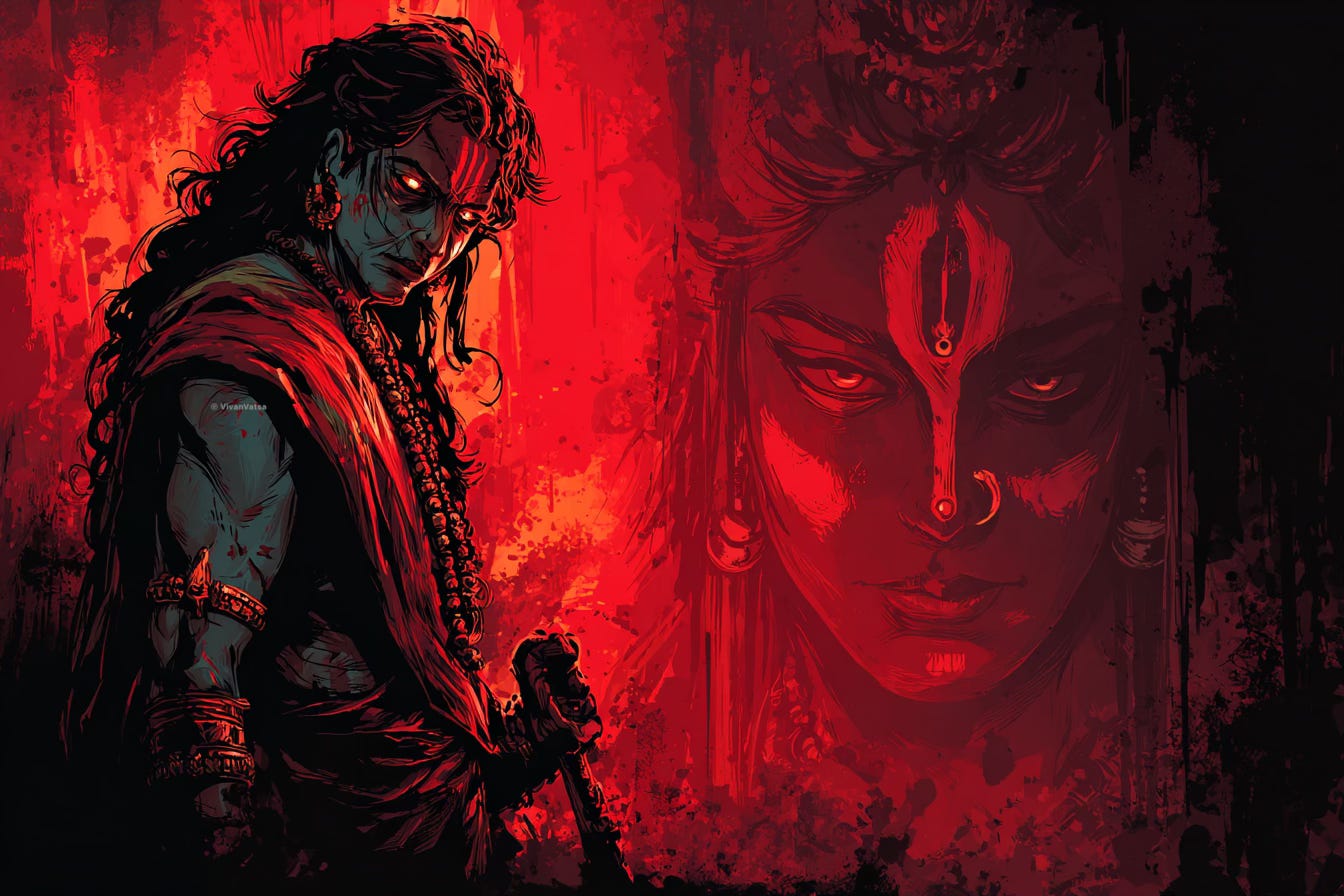
Too much conformity and mediocrity has made this nation weak.
Not weak in resources or potential, but weak in spirit, in civic consciousness, in that fundamental sense of belongingness to anything larger than immediate self-interest.
We have become nation of isolated atoms, each optimizing for personal survival while the collective structure disintegrates around us.
Voltaire said this about societies in general, but it applies to India with surgical precision.
My question is brutal: is it colonial trauma that made Indian society so pathologically selfish, or is it something deeper?
Did the British create this condition? Or did they simply exploit weakness already present? The answer is uncomfortable. Both. Colonial rule tortured us to be subjects, not citizens. Slaves, not sovereigns. For two centuries, Indians learned that system is enemy, that rules exist to be circumvented, that collective good is someone else’s problem.
It has engraved in us and became cellular memory.
But colonialism ended seventy-seven years ago. At some point, blaming colonizers becomes excuse for refusing to take responsibility for what we became after they left. We inherited devastated nation and instead of rebuilding collective consciousness, we doubled down on individualism disguised as entrepreneurship, selfishness disguised as pragmatism, and corruption disguised as survival strategy.
What pains me more is that we took the worst lessons colonialism taught and internalized them as culture.
Civic sense has left the chat. Walk through any Indian city and witness the evidence. Garbage on streets that people threw there deliberately. Traffic rules ignored as default behavior. Public spaces treated like dumping grounds. Queue-jumping as competitive sport. This is not poverty. Rich Indians behave identically. This is degradation of civic consciousness. The idea that public space deserves care, that collective resources require protection, that other people’s time and dignity matter, these concepts do not exist in functional form.
The British left us devastated. True.
But what did we do with independence?
We created democracy without citizens. We built institutions without integrity. We wrote constitution without cultivating constitutional consciousness in population. We thought political freedom would automatically produce civic responsibility.
It did not.
It produced seventy-seven years of increasingly sophisticated selfishness where everyone learned to game every system for personal advantage while watching collective infrastructure crumble.
Where did we go wrong?
The answer is everywhere and nowhere. We failed to build national identity beyond opposition to colonizers. Once they left, what bound us together? Language? Religion? Region? All of these divide more than unite. We are federation held together by inertia and mutual economic dependency, not by genuine sense that we are one people with shared destiny. This lack of cohesion creates vacuum that selfishness fills.
Mahabharata spoke of this very well. The Kuru kingdom fell not because Duryodhana was evil but because dharma collapsed at collective level. When everyone pursues self-interest over dharmic duty, kingdom destroys itself from within. Kauravas and Pandavas were family. They still slaughtered each other. Why? Because personal ambition, grudges, and zero-sum thinking replaced dharmic order. Modern India is replaying this. We are family. We are destroying each other anyway.
Dostoevsky saw this pattern in Russia. “Every man for himself” becomes operating principle when shared moral framework collapses. His characters are trapped in spiritual isolation, unable to connect authentically with others because they have no common ground beyond transactional relationships. This is India now. We interact transactionally. What can you do for me? What do I get? Every relationship is negotiation. Nothing is given freely. Nothing is done for collective good unless personal benefit is clear.
The colonial trauma explanation has some validity. For two hundred years, Indians learned that resisting British directly led to punishment. So resistance became subtle. Passive-aggressive. Everyone learned to lie to authority while doing whatever they wanted when authority looked away. This became cultural pattern. Rules are for show. Everyone cheats. If you are not cheating, you are losing. This mindset did not disappear when British left. It intensified.
Post-independence leadership failed to address this. We needed cultural transformation to accompany political freedom. We needed movement to rebuild civic consciousness, collective responsibility, national identity beyond grievance. What we got instead was Nehruvian socialism that incentivized corruption through license raj, followed by liberalization that incentivized greed through market economics. Neither produced citizens. Both produced opportunists.
Indian education system is designed to produce slaves. Not workers, not thinkers, not citizens. Slaves. Students who follow orders, memorize without questioning, respect hierarchy without critique, optimize for exam scores rather than understanding. This is British colonial education system. We kept it. Seventy-seven years later, we are still training children to be obedient employees in system they have no power to change. No wonder civic sense is absent. We never taught it.


“This slave morality perfected.” Nietzsche would have called it this.
The slave learns to accept his position and judge everything from that position. The Indian middle class has slave morality. They do not question why system is broken. They question how to succeed within broken system. This is why jugaad is celebrated. Jugaad is not innovation. Jugaad is accepting that system does not work and finding clever workaround instead of demanding system be fixed. This is slave mentality.
The Bhagavad Gita asks Arjuna to fight his dharma even when it costs everything. Arjuna wants to escape. Find excuse. Avoid hard choice. Krishna does not let him. Your dharma is to fight. Fight or be coward forever. Modern India is Arjuna refusing to fight. We want comfort. We want easy answers. We want someone else to solve problems we created. This is why we will get villain we deserve.
India as nation has become soft. Not physically. Economically we are growing. Technologically we are advancing. But spiritually, morally, civically—soft. We avoid hard decisions. We take easy routes. We compromise principles for convenience. We watch injustice and do nothing because intervening is inconvenient. We see corruption and participate because everyone else does. This softness is terminal.
Authoritarian government might be what we get. Not because we need it, but because we created conditions that demand it. When civic consciousness is absent, when everyone is selfish, when nobody follows rules voluntarily, when collective infrastructure collapses because nobody maintains it, only two options remain: chaos or authoritarianism. Democracy requires citizens. We have consumers. Consumers cannot sustain democracy. They can only sustain market. And market does not care about civic good.
The villain we deserve might be authoritarian leader who imposes order through force because we refused to create order through voluntary cooperation. This is not ideal outcome. This is failure state. But it might be necessary failure state. When patient refuses medicine, sometimes disease must progress to crisis before treatment becomes possible. India is refusing medicine. We want growth without discipline. Freedom without responsibility. Rights without duties. This is not sustainable.
Voltaire’s observation was that societies get government they deserve, not government they want. We want benevolent leadership that solves problems without requiring us to change. What we deserve is leadership that reflects our actual character: transactional, opportunistic, willing to bend any rule for advantage. Or we deserve opposite: leadership so authoritarian it forces us to behave civically because voluntary civic behavior has proven impossible.
What went wrong is simple: we inherited nation and failed to build civilization. Nation is political entity. Civilization is shared consciousness, values, behaviors that make collective life possible. British gave us nation. We thought that was enough. It was not. Without civilization, without shared understanding of how we ought to behave toward each other, toward public space, toward collective resources: nation is just administrative boundary containing competing tribes.
This is India now. Administrative boundary containing competing tribes. Each tribe: caste, religion, region, language, class...pursuing its interest at others’ expense. No shared identity strong enough to override tribal loyalty. No civic religion binding us together. Democracy without demos. Republic without res publica. Just individuals and tribes fighting over resources while infrastructure crumbles and civic space deteriorates.
The irony is brutal. We fought for freedom from British. We won and still lost it all.
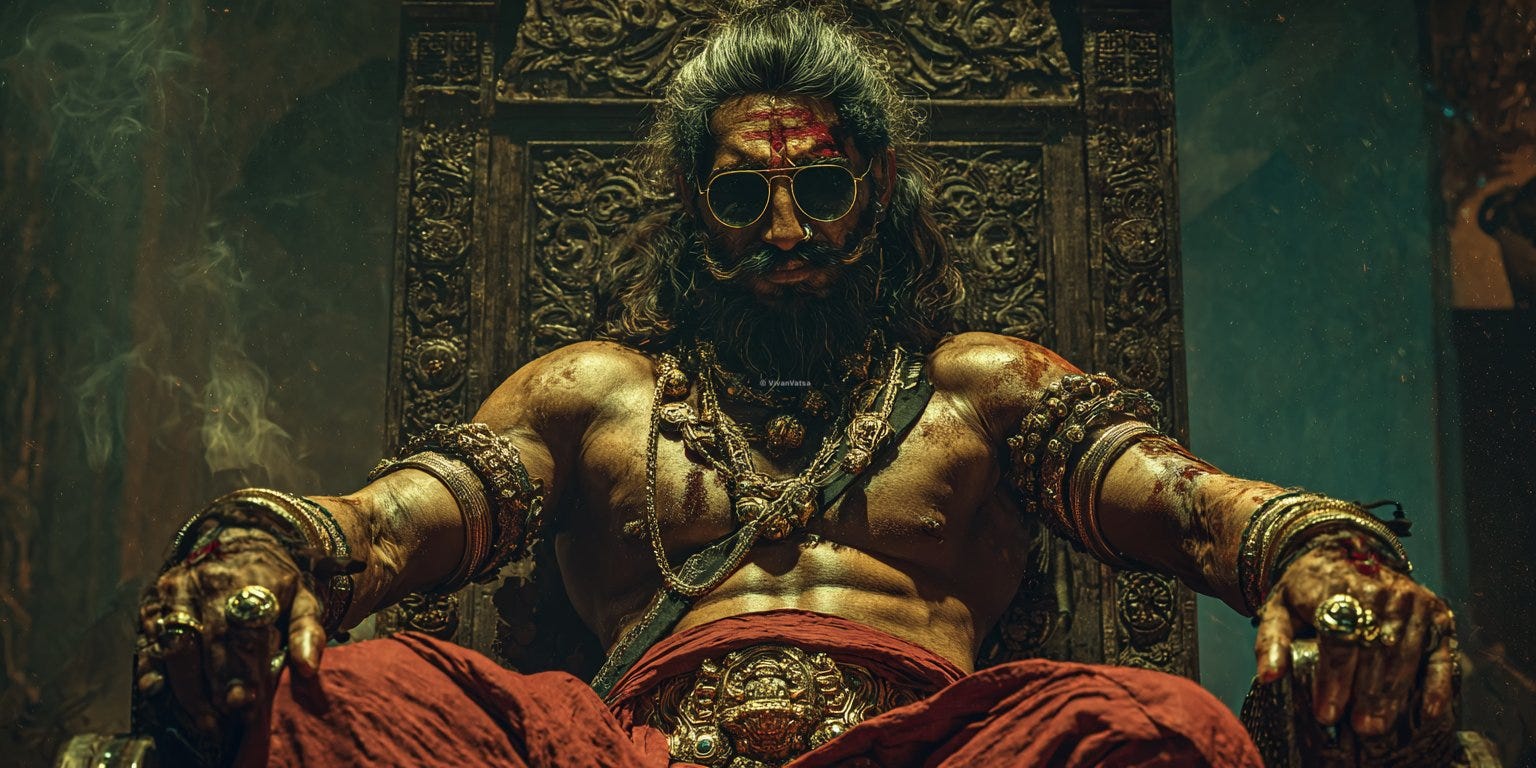
We spent seventy-seven years proving we are not ready for freedom. We cannot handle it. Freedom requires discipline. We have none. Freedom requires civic consciousness. We have selfishness. Freedom requires putting collective good above personal gain at least sometimes. We refuse. So we will lose freedom we fought for because we squandered it through decades of irresponsible behavior.
India’s future is not predetermined. We can still choose differently. But choice requires admitting we are problem, not colonizers who left decades ago, not politicians who exploit us, not system that we game. Us. Our selfishness. Our refusal to care about anything beyond immediate circle. Our willingness to cheat, cut corners, ignore rules, free-ride on others’ cooperation while refusing to cooperate ourselves. Until we admit this, nothing changes.
Maybe we need villain. Maybe we need crisis severe enough to force transformation we refused to choose voluntarily. Maybe we need authoritarian period that teaches us why civic responsibility matters by showing what happens when it is completely absent. This is hard path. Painful path. But might be necessary path because easy path, voluntary civic consciousness, democratic self-governance, collective responsibility, we already tried and failed.
India will get villain it deserves. Not because we are uniquely terrible but because we are typically human. Humans do not choose difficult good over easy bad unless forced. We had opportunity to build civilization through voluntary cooperation.
We chose selfishness instead. Now we face consequences.
The villain is already forming.
Question is not whether villain comes but what we learn from villain when he arrives. And whether we learn anything at all.